

 Follow
Not everything is as it seems, and not everything that seems is
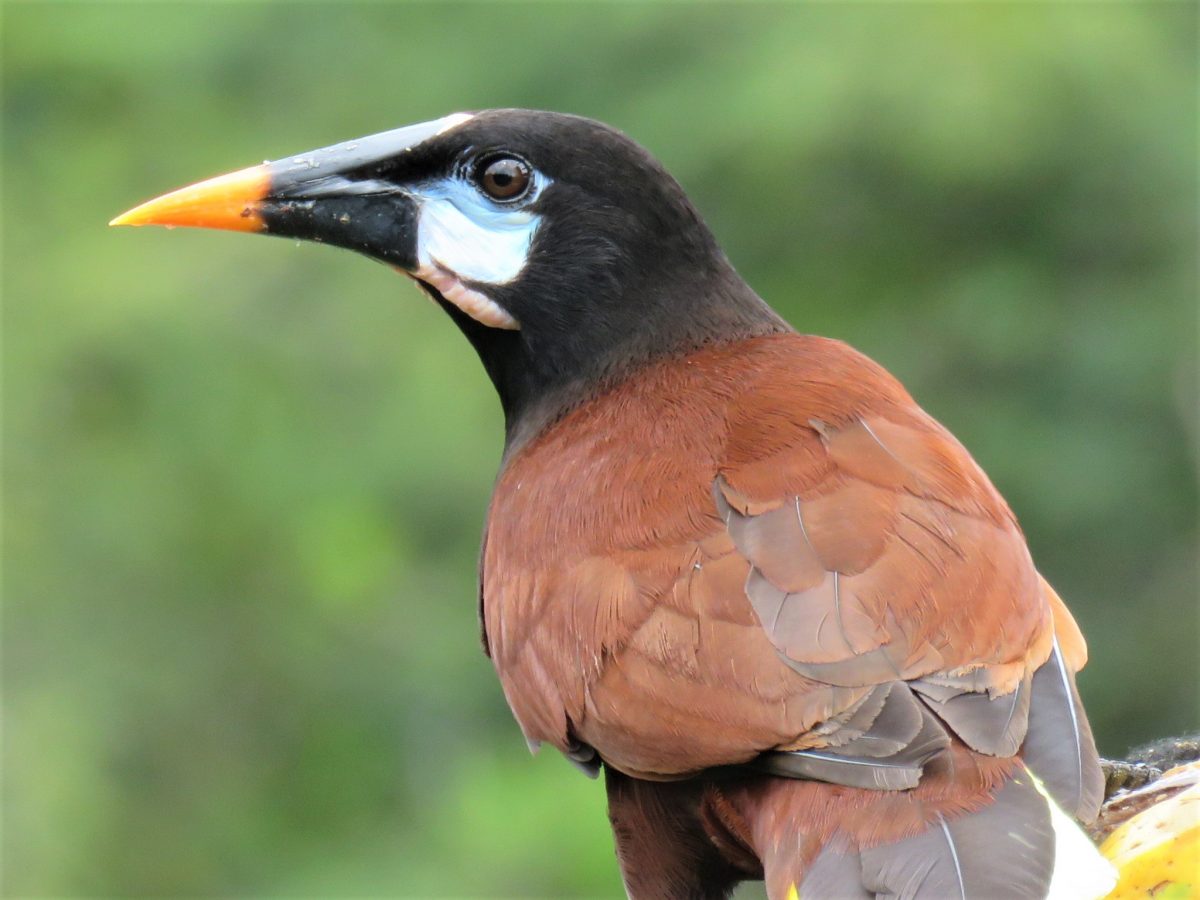
Neotropical Orioles are very similar to the Old World ones, but are not related. Same name, same looking, different family. How about the Blackbirds? Well, Neotropical and Paleotropic blackbirds share the same name, but dont look the same and belong to a different family (thrushes and icterids). Thats because our blackbirds and orioles belong to the Icteridae, family that is found only in the Americas.

The confusion started when the early naturalists visiting the Americas from Europe saw our orioles and thought them to be related to the Oriolus orioles of the Old World. Today we know they are not closely related. The family has around 100 species, and birdwatchers from Europe, Asia or Africa can easily mistake many members of this family by some Old World families like Sturnidae – Starlings, Oriolidae – Old World Orioles, Corvidae – Crows, Jays, and Magpies and Callaeidae – Wattlebirds. The other bird names besides New World orioles and Blackbirds that are part of this family are bobolink, meadowlarks , grackles, cowbirds, oropendolas, troupials and caciques.
Most members of Icteridae are considered Least Corcern however there are some Endangered and Critically Endangered species and Slender- billed Grackle is Extinct. Our grackles are very common in some cities, and are play the same role as Mynas in Asia.
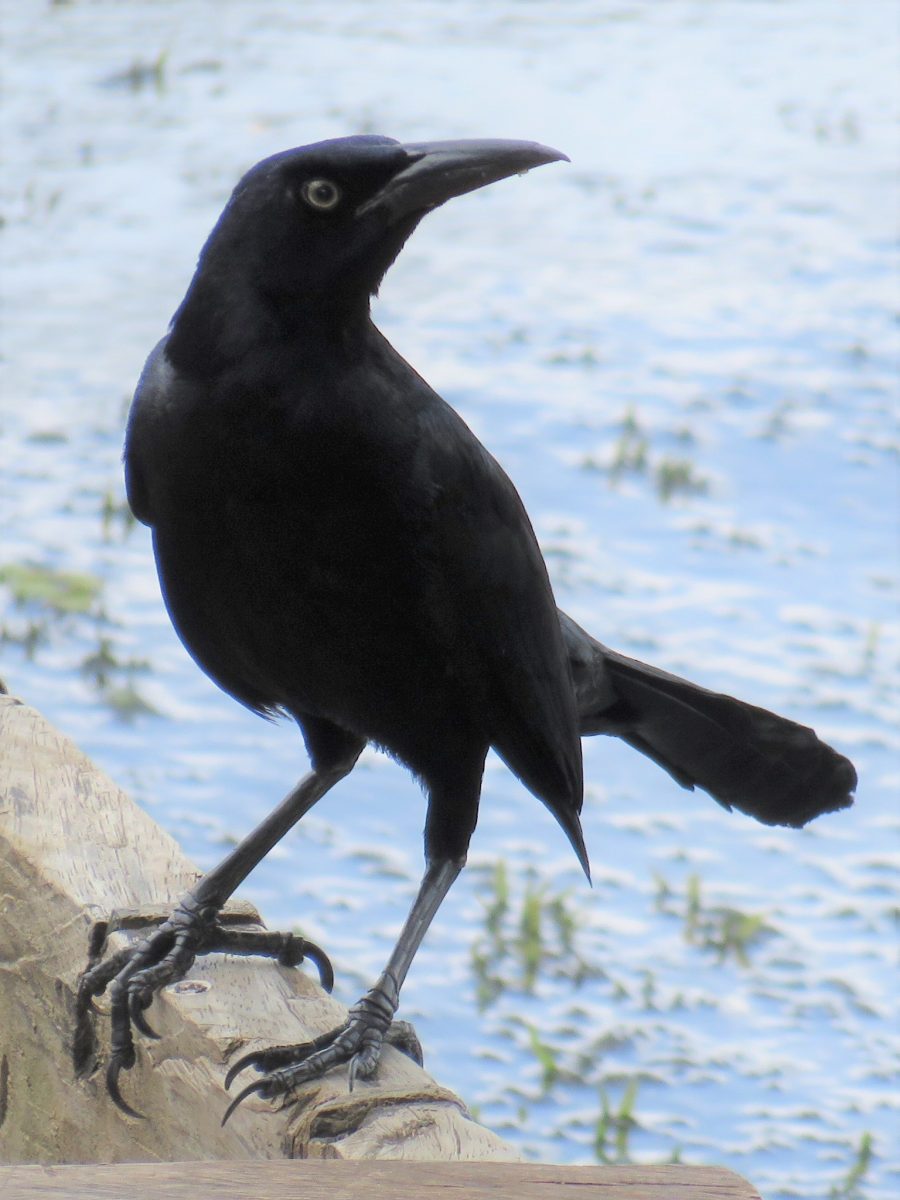
Icterids or New World blackbirds are small to medium-sized, some very colorful. Most species have black as a predominant plumage color, some are completely black and look like african or asian Drongos.Some others have a combination of black, brown, red or yellow.
The monogamous species show very little difference between sexes, and both male and female often have bright coloured plumage, and on the other hand polygamous species show sexual dimorphism .
The family name comes from the Greek ikteros. The word is related to jaundice, probably because Iktericus was a mythological yellow bird which was thought to cure this disease. Icterid literally means jaundiced.
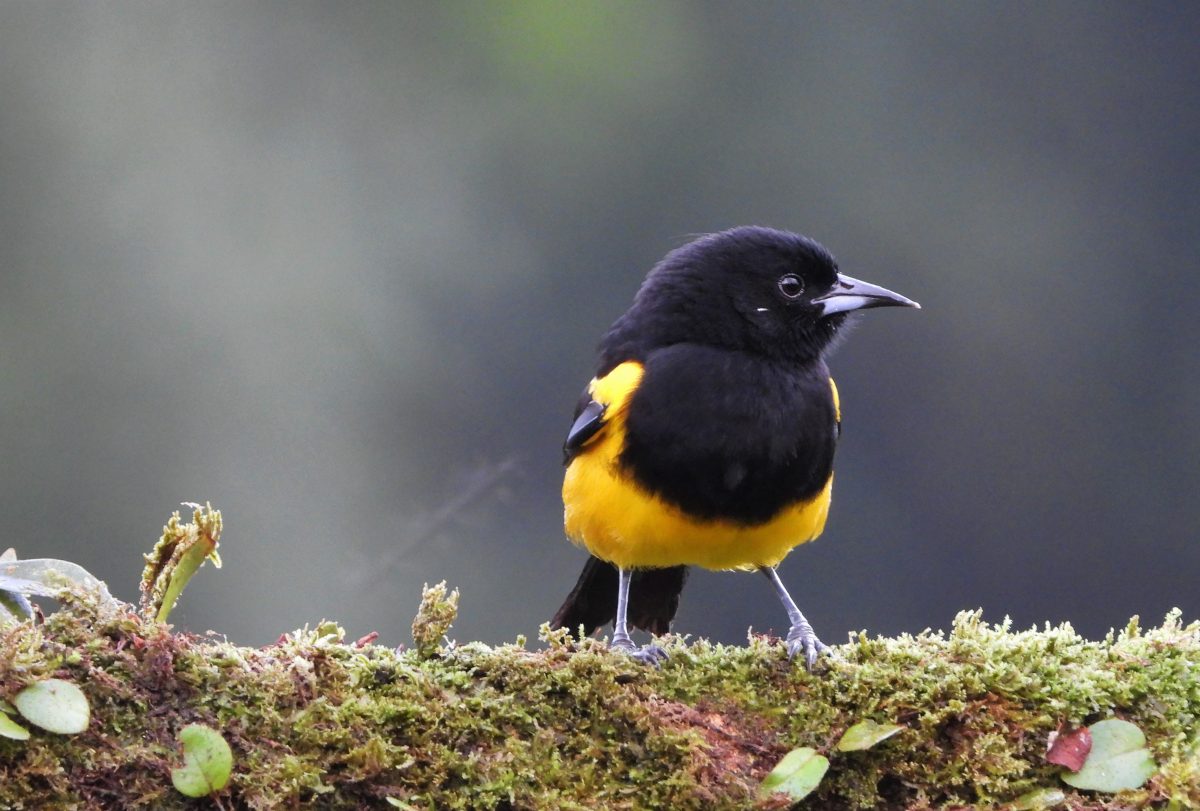
Icteridae no doubt evolved in the New World, almost certainly in South America where today the largest number of species occur. Today all are confined in their distribution to the New World. However, the large genus of the orioles, may be of Central American origin.
They inhabit a range of habitats, including scrub, swamp, forest, and savanna, and some temperate species are migratory.
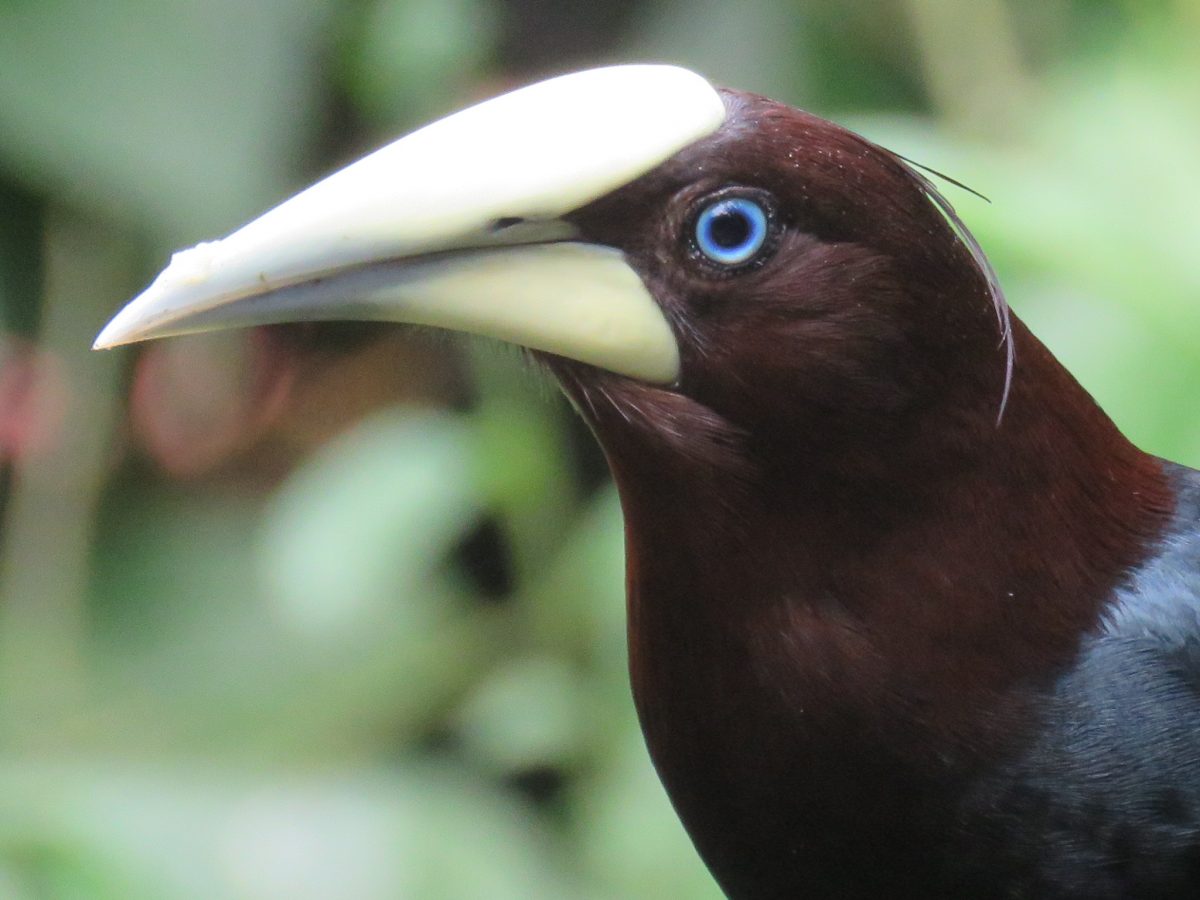
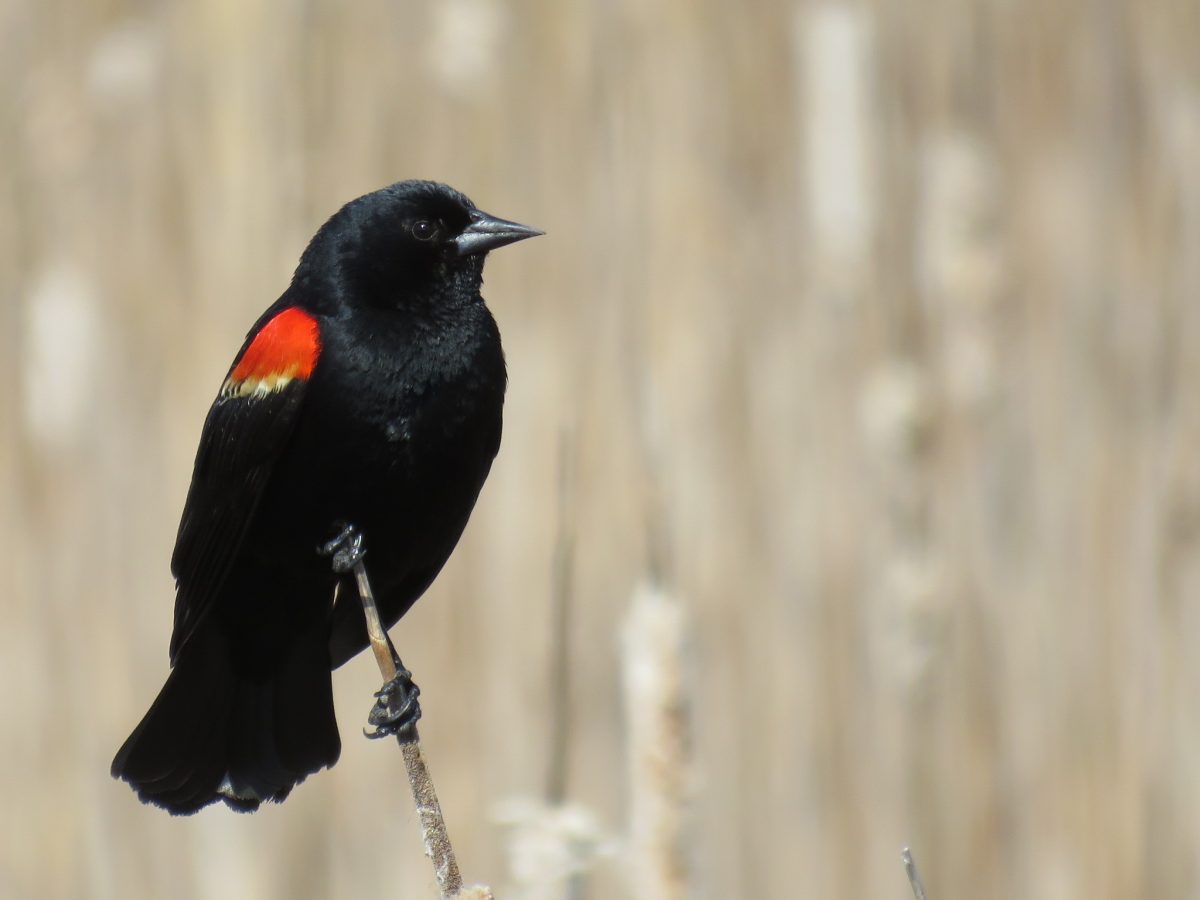
Icterids have a very varied diet and feed on a broad range of items. The largely arboreal oropendolas, caciques, and orioles commonly forage by gleaning food from vegetation in trees. Members of this family feed on insects, fruit, nectar, small vertebrates (including nestlings of other birds), seeds and other grain. In fact, Red- winged Blackbird has become agricultural pests in the United States and is considered the worst vertebrate pest on some crops, such as rice.
They show an interesting morphological adaptation. The skull is configured to allow them open their bills strongly rather than passively, allowing them to force open gaps to obtain otherwise hidden food. This ability is called gaping, By gaping they insert their closed bills into a flower, fruit, or stem, then open the bill to expose food or facilitate nectar feeding.
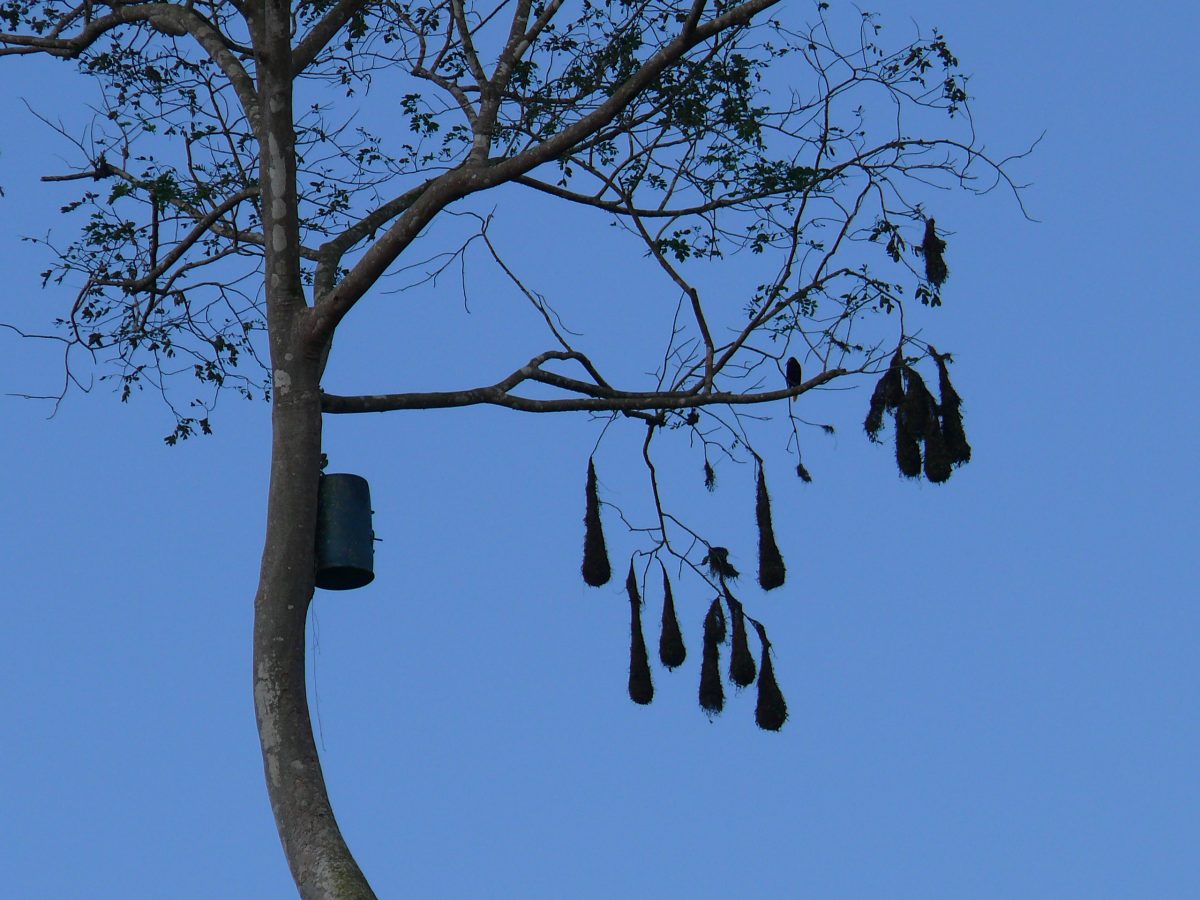
Nesting habits of these birds are similarly variable Orioles, caciques, and oropendolas weave distinctive pendant bag nests, which are suspended from the branches of trees. Many icterids are colonial, nesting in colonies of up to 100,000 birds. Some other members of the family (the cowbirds) engage in brood parasitism: females they lay their eggs in the nests of other species of bird.
Natural History of the most beautifuf vulture of the world
(or the ugliest of ibises)

The King vulture is without any doubt one of the “big five” birds that all birders and photographers who visit the Tropical Americas want to see. This large bird found in Centraland South America, lives predominantly in tropical lowland forests from southern Mexico to northern Argentina.
According to the red list status of the IUCN- International Union for Conservation of Nature, the status of this bird is Least Concern but they also say that current population trend is Decreasing.
Vultures here and in China are ugly, we all know that, but this species is a real exception and there is no obvious adaptive biological reason for this unusual coloration. If you work for the sanitation deparment of the forest you have to be efficient but not beautiful, isnt it?

Our King Vultures are among the bird world’s largest scavengers, but they also kill small reptiles, wounded animals, newborn calves and there are reports of king feeding on palm fruits.
They have powerful, hooked beaks that are pretty well adapted for tearing open tough carcasses. Thats exactly what the Old vultures do as well. Neotropical and Paleotropical vulture’s head and neck are bald. There is a reason for that. This may help the birds to stay clean, and ensure that the decomposed organic remains don’t not cause infections or bacterias reproduce in the bird’s plumage. All vultures have the same problems and nature invented the same solutions. This is another kindergarden explanation of the concept of evolutionary pressure and adaptation. Again, all the vultures in our universe look the same because they do the same, but Old World vultures and New World vultures are not related. Not even close.
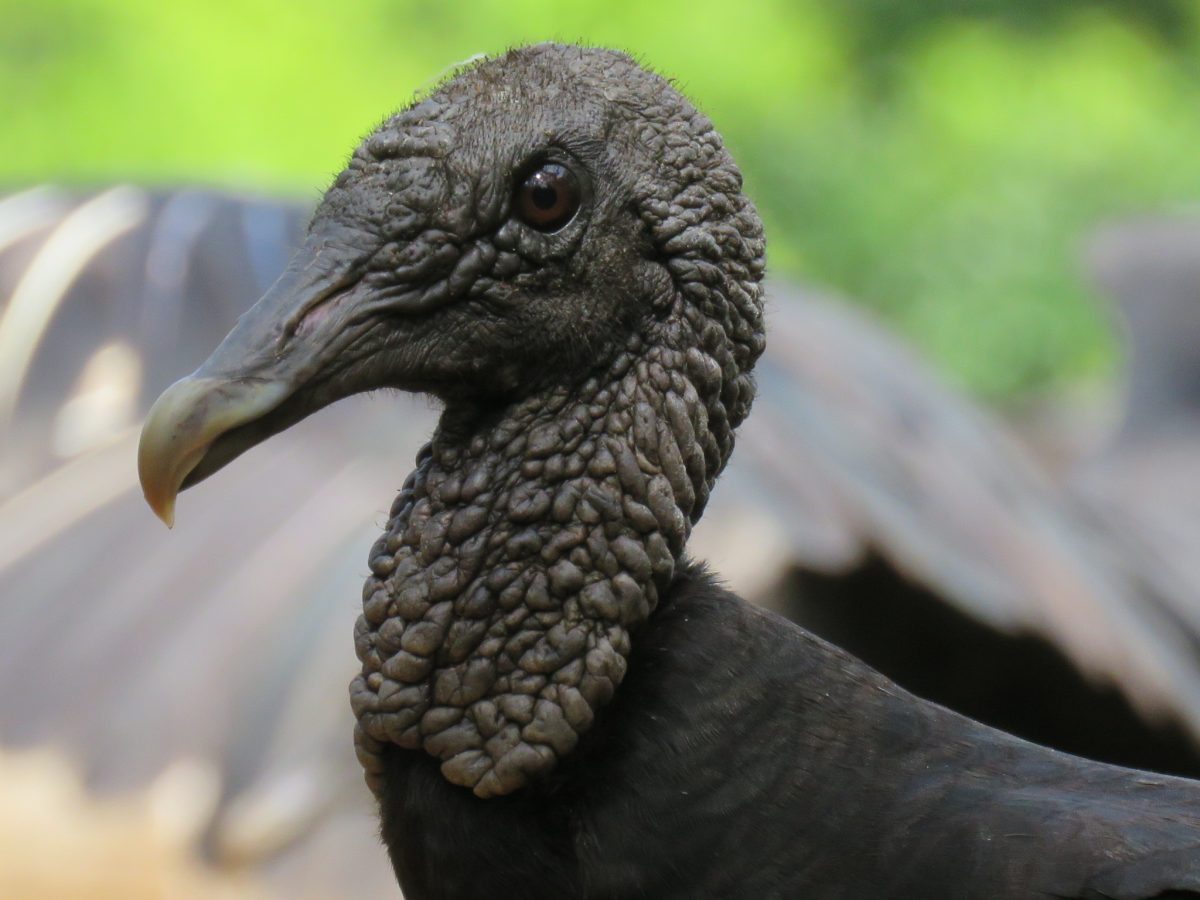
The New World and Old World vultures evolved from different ancestors in different parts of the world. Vultures from Eurasia and Africa belong to the accipiters and are related to raptors (eagles and hawks). Our vultures in the Tropical America belong to the cathartids and are related to the ibises. Yes ibises, believe it or not.
Well, I am sure that the eagles of Europe are not very proud of their vulture cousins, but what would the Roseate Spoonbill would say about their vulture relatives ?
But the King Vulture is an exception.

The scientific name is Sarcoramphus papa and it is the only surviving member of this genus. The genus comes from the Greek word sarx, “flesh”, and rhamphos, “crooked beak of bird of prey”. What happens is that the bird has a very noticeable orange fleshy caruncle on its beak. The species name comes from the Latin papa, “bishop”, probably because the bird’s plumage resembles the clothing of one. In Spanish the word for the Pope is Papa. A coincidence?
So the English name derived from Greek and Latin of the bird should be “The bird of prey with a crooked and fleshy beak that looks like the Pope”.

King Vulture is not the only neotropical vulture, there are six more species: Andean Condor (king vulture’s closest living relative), California Condor, Black Vulture, Turkey Vulture, and Lesser and Greater Yellow- headed Vulture. There is fossil evidence of another member of Sarcoramphus living in North America. Bones of the Kern vulture (Sarcoramphus kernense) were found at Pozo Creek in Kern County, California.
How about Florida? Well, let me tell you a really interesting story. Please look at the following painting. It was made in 1734 by Eleazar Albin. This drawing has been called the “Painted Vulture”
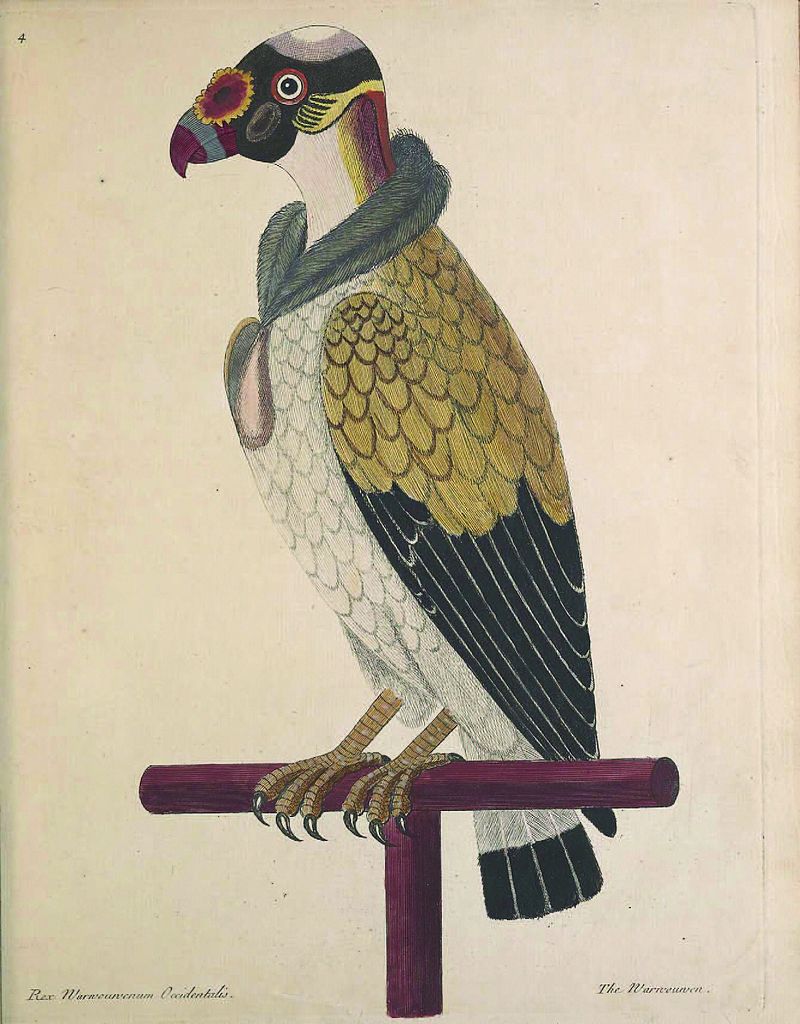
This bird is a King Vulture I am sure. What else could it be?
Mr William Bartram was an american explorer who spend a good part of his life studying the botany and ornithology of the southern British colonies in North America. People consider him as the first naturalist who penetrated the dense tropical forests of Florida.
He described in 1791 two species of vulture new to science. One is the Black Vulture, common from the US to Chile. The second one matches the description of the King Vulture
almost completely except for the tail. Mr Bartrams called the bird Vultur sacra, and one of the most relevant parts of the description is its white tail, and the King Vulture we know has a black tail. He also used other names for the bird like White Eagle, White- tailed Vulture or Croped Vulture.

Some ornithologists from 19th century considered the vulture as a distinct species or a subspecies of the one that lives in Central and South America Mr Bartram called it Painted Vulture and described the bird as being abundant and even claimed to have collected one.
To make the story even more interesting, fifty seven years before of Mr Bartram´s report a drawing of Painted Vulture was made by the naturalist Eleazar Albin in 1734, but no one knows where this “report” comes from. No other naturalists recorded the Painted Vulture in Florida and sixty years after the sighting its validity began to be questioned. In the late 1800 the first president of AOU – American Ornithologist´s Union Mr Joel Allen call it a “purely mythical species”. Currently the bird is omitted from official checklists. However, recent ornithologist think the Painted Vulture went extint by the early 1800s and should be recognized as vanished but valid North American species (Sarcoramphus sacra or S. papa sacra).

I find this an exciting mystery. No wonder why the prominent american ornithologist Mr John Cassin described this as the most inviting problem in North American ornithology. There is an excellent description of the situation in an article written by Noel F.R. Snyder and Joel T. Fry named “Bartram´s Painted Vulture: A bird deserving recognition”. In Cassinia, DVOC.org 2016/ 06
The species shows a little sexual dimorphism, with almost no difference in plumage and little in size between males and females.
At this point readers from Asia, Europe and Africa have it clear that your vultures are not related to ours. But, what group has the largest species? Well, this is a topic that intrigued me too and here are some measurements between Old World and New World vultures as a comparison:
King Vulture total length 71-81 cm wingspan: 170-200 cm
Bearded vulture total length 94–125 cm wingspan 231–283 cm (Lammergeier)
Cinereous Vulture total length 100–120 cm wingspan 250–295 cm
Andean Condor total length 100–130 cm wingspan 260 –320 cm
According to the information I have found, Andean Condor is the largest of all vultures.
King Vulture is a scavenger. Like other vultures, they glide on air currents, conserving energy while searching the forests or savanna below for the corpses of dead animals. Consensus has been that it does not detect odours, and Scientists of Cornell University say that these vultures lack a developed sense of smell and they depend on other vultures to lead it to a carcass. However a 1991 study demonstrated that the king vulture could find carrion in the forest without the aid of other vultures, suggesting that it locates food using an olfactory sense.
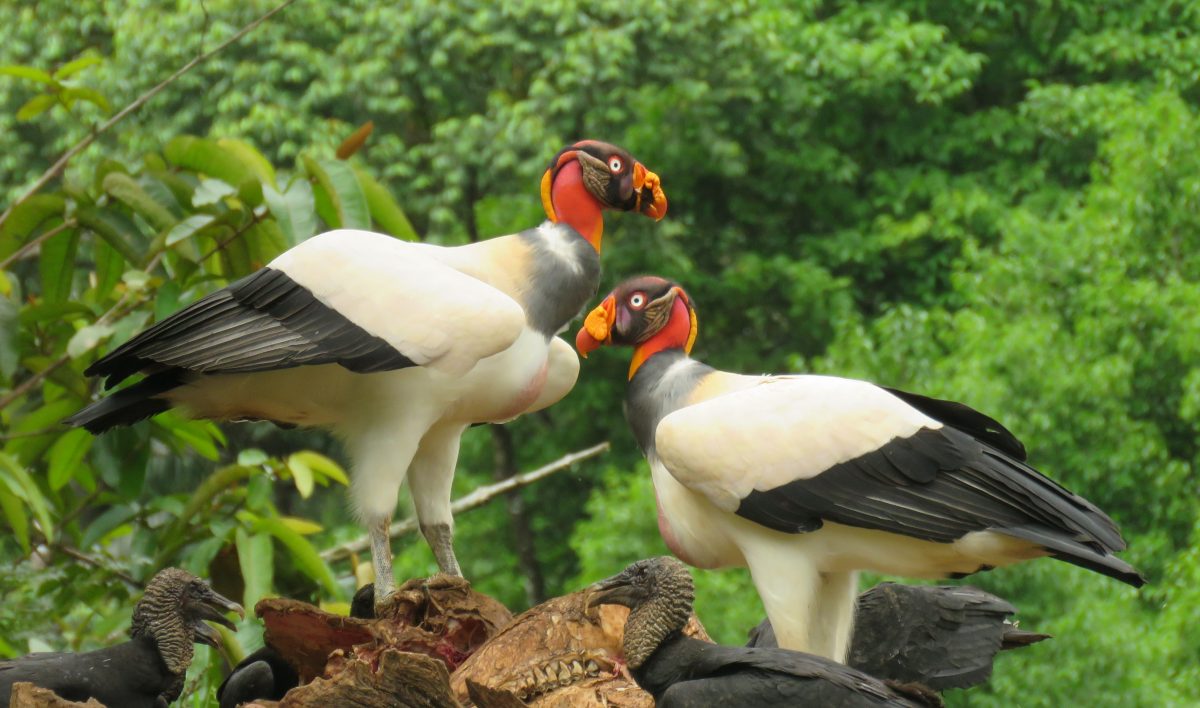
This vulture is called King because of its majestic appearance, but also the local people in Latin America say that the King Vulture displaces smaller New vulture species and makes the initial cut into a fresh carcass because of its higher hierarchy. The truth is that due to its stronger beak it can break the skin of large animals like cows and horses more easily. For this reason the other vultures let him eat first and thus leave the table served for the others.
King Vulture is a non- migratory bird and, unlike the turkey, lesser- yellow headed and black. It generally lives alone or in small family groups
Note: This is a series of articles about birds of the Neotropics. The species of birds that will be covered in this collection of articles are toucans, quetzal, motmots, manakins, tanagers, and many other species.
The articles do not have a scientific format, but rather have a general informative character. The text is the product of the investigation of works written on the subject, although bibliographic citations are not provided.
Wildbird is a tour operator agency that organizes birdwatching trips to Costa Rica and Panama. Tours for photography and birding holidays.

You briefly saw a bird but you are not sure if it is a Tucan or a Hornbill. So how do you tell them apart at a glance? First clue, look around you. Where are you? Africa, Asia? Ok, is a hornbill.
Anywhere from Southern Mexico, through Central America to northern Argentina? Well, is a toucan!
Both families of birds look very similar, but they are not related. They belong to different orders, and that represents an important distance in phylogenetic terms. They look the same because they do the same. This is the kindergarden´s explanation of convergent evolution. Both groups play the same role in the forest but they live in totally different parts of the planet. Both have the same environmental pressures and for that reason they developed the same morphological solution. This has happened in many animal groups. The case of the vultures of the old world and the vultures of the neotropics is similar, but I will talk about that in another blog.

Both families have characteristic bills adapted for reaching fruits and probing into tree cavities, however most hornbills have a distinctive beak feature called a casque and toucans dont have it. Researchers say this feature gives hornbills the ability to amplify their vocalizations in the rain forest.
Although not only the beak is a common trait. Wide, short heavy wings adapted for flight under the forest canopy, makes both groups a sort of clumsy flyers that prefers hopping from branch to branch. Birders in the Paleotropics and birders from the Neoptropics are used to see those birds gliding for short distances in the middle of the forest.
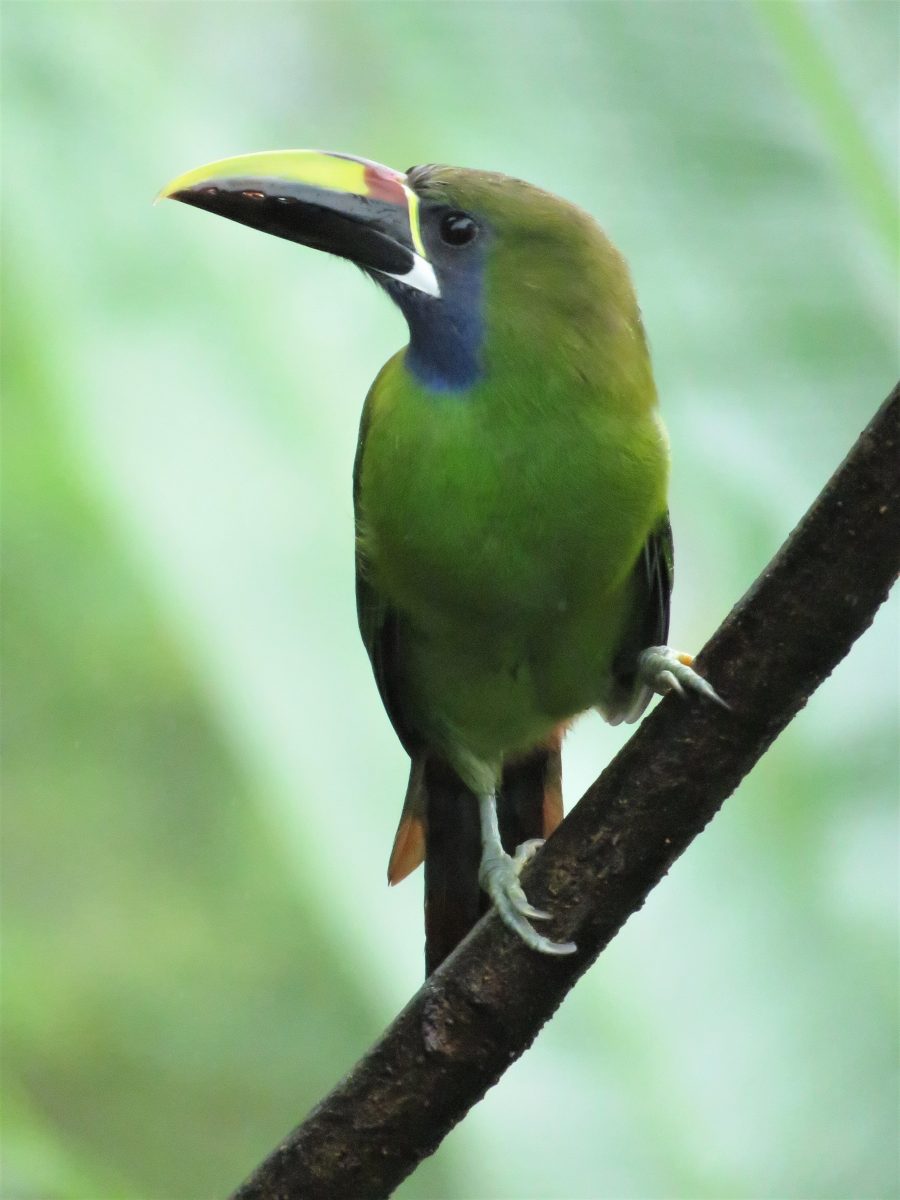
Tucans and hornbills have a long tail, predominantly black and white plumage in general with contrasting brightly colored beaks and rumps, are some characteristics that also have in common. Their behavior and natural history have many similar aspects. Both hornbills and toucans nest in tree cavities. They are both omnivorous feeding on fruits (tucans are primarily frugivorous), insects and small creatures, including smaller birds, bird eggs, lizards and young mice. I have personally observed tucans feeding on snakes, quetzal chicks and bats.
No matter how many characteristics they have in common, what really stands out in these birds is the size of their beaks. It is for that reason that I am going to dedicate a little more explanation to this outstanding and unmistakable trait in both groups.

Their similar bills come in handy when foraging for food, to make their nests, and protecting eggs and nestlings from potential predators. Bird beaks are made of keratin, a fibrous protein in hair and nails on humans, scales on reptiles and feathers on birds. When we see these long and prominent bills, we have the impression that they are heavy and that their bite is strong and painful. Well, according to what I have heard, ground hornbills don’t bite hard enough to hurt. But I have also read that the crushing strength of the hornbill beak is six times greater than that of the toucan. In the case of tucans, I personally made the experiment once. Not long ago, I had the opportunity to take in my hands an Keel- billed Toucan that got caught in a mist net. I told myself it is now or never, and I presented him with one of my fingers in sacrifice of science. To my surprise the bite was quite soft.
The toucan’s beak might look heavy, but some studies shows that the beak is optimized to an amazing degree for high strength and very little weight. Though large, the bill of the toucan is mostly hollow and light. I took the following picture of a Toco´s Tucan bill at the Natural History Museum in London. You can clearly see the inside structure that looks like fiberglass.

Interestingly, the toucan has a long tongue to match its large beak, whereas the hornbill’s tongue is pretty short. Also, the tongue of a toucan is long and narrow and lined with bristles that help them swallow food.
At this point I hope it is clear that toucans and hornbills look alike but they are not family, not even cousins. So who are the relatives of toucans? Neotropical barbets and woodpeckers are related to them. They all belong to the order Piciformes, whose members possess two rearward- and two forward-pointing toes. This this feature is called zygodactil feet (or feet with toes facing in different directions) – two toes face forward and two face back. Toucans are members of the family Ramphastidae with 35 species.

The name Toucan comes from the word tukana given by the Tupi aboriginal group from Brazil. They are resident breeders and do not migrate. In the forest they usually found in pairs or small flocks. Some of the big species like Keel- billed and Yellow- throated Toucans sing from a high perch in the afternoon. They are in general are among the noisiest of forest birds. They can live for a period of up to 20 years.
Along with hummingbirds, motmots, and manakins, toucans is one of the neotropical families that you shouldn´t miss.
Note: This is a series of articles about birds of the Neotropics. The species of birds that will be covered in this collection of articles are toucans, quetzal, motmots, manakins, tanagers, and many other species.
The articles do not have a scientific format, but rather have a general informative character. The text is the product of the investigation of works written on the subject, although bibliographic citations are not provided.
Wildbird is a tour operator agency that organizes birdwatching trips to Costa Rica and Panama. Tours for photography and birding holidays.

When a birder from Africa or Asia sees our Turquoise- browed Motmot, the first thing they say is “what kind of Roller is that?” Is a Motmot a kind of Roller? Well, not exactly, but they are related. We don’t have Rollers in the tropical Americas but the family of motmots are cousins of rollers.
Momotidae is a group of passerines that belong to the order Coraciiformes made up of 10 families of birds , which also includes the kingfishers (Alcedinidae), bee-eaters (Meropidae), hoopoes , and hornbills (Bucerotidae). However, and this is important, some authorities place the hoopoes in the Upupiformes as a separate order, and some others place hoopoes and hornbills in the Bucerotiformes. Ok, remember this is not a scientific article and I am not going further in taxonomic concepts, but the general idea is that motmots and some Old World birds you know well are related. The fossil records suggest that ancestors of contemporary motmots were from the Old World, as evidence was found in Switzerland from the Oligocene (30–40 million years ago)

Not long ago one of my clients from Puerto Rico found our Tody Motmot (Hylomanes momotula) and called the bird a “giant tody”. Well, the family of the todies are restricted to the Caribbean, but they are very similar to some motmots. In fact, Tody Motmot is considered the most primitive family member, and perhaps links the motmot and tody families.
But many birds in the world look similar and are not related. What do motmots, bee eaters, kingfishers, todies and rollers have in common? Basically a unique middle-ear ossicle, DNA, bright plumage, limb musculature, little or no dimorphism between sexes, earth-excavated nest burrows, and predation by short flights from a perch to seize prey and return to the perch), Many motmots have serrated bills that help to catch big preys like grasshopers, caterpillars, dragonflies, scorpions and crabs. Having the chance they try to catch lizards, small snakes, frogs, and small fish. In Costa Rica, there are reports of motmots feeding on poison dart frogs.
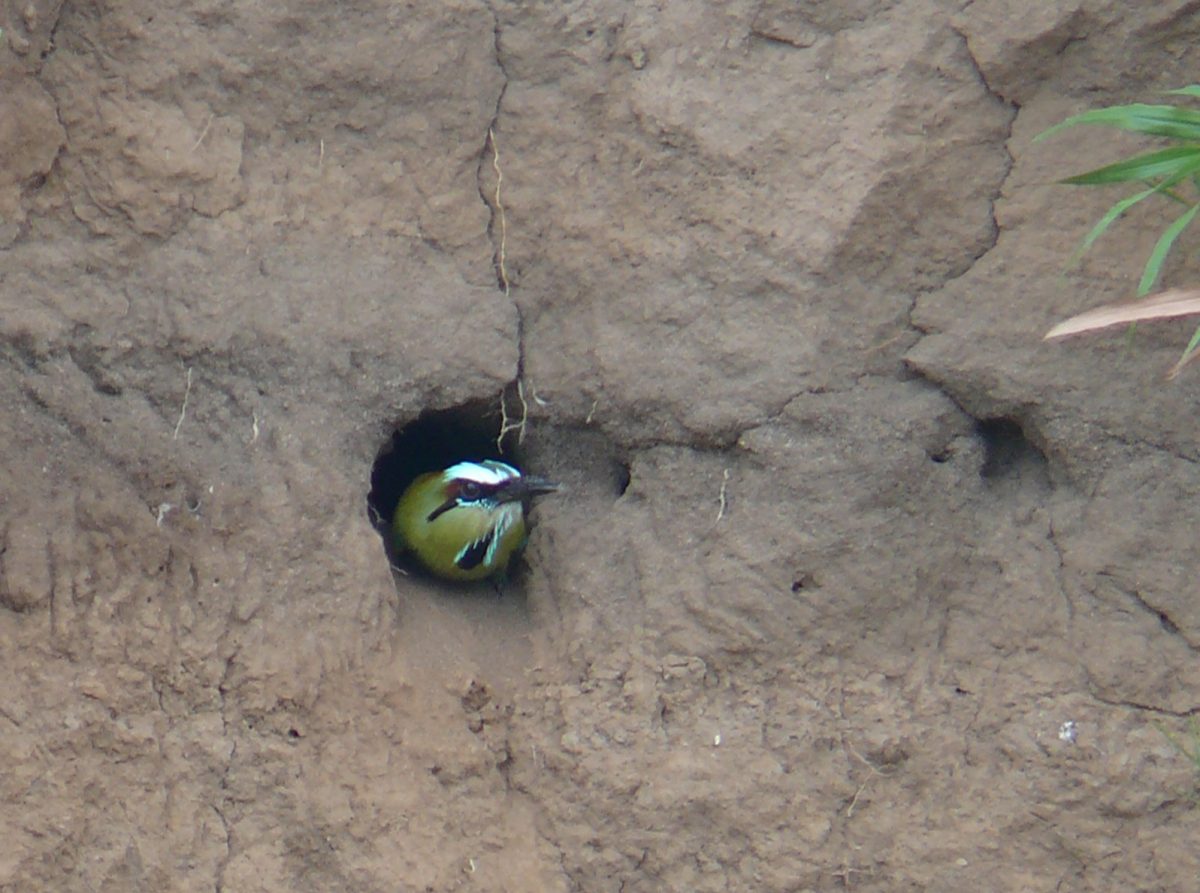
Their long and distinctive racket-like tip is the field mark that helps to recognize this group in the forest, but there are exceptions because Tody Motmot has a short tail. Despite being very colorful and medium in size, motmots often go undetected. Thats because they are not very active, just sit and wait. Their peack of activity active is during twilight at dawn and dusk.
Something they have in common with the other members of Coraciiformes is their habit of nesting in tunnels in banks, near water or in the forest. Both parents care for the young.
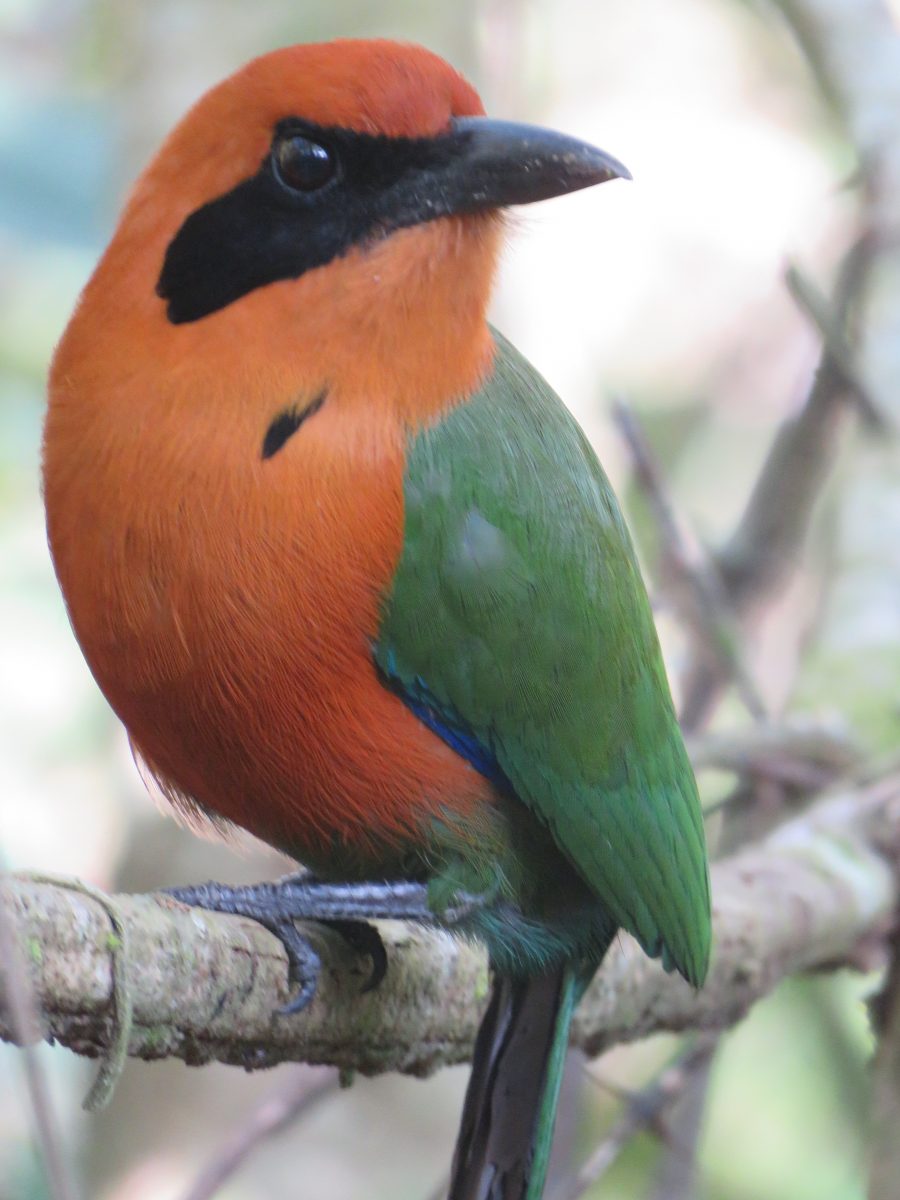
In my personal experience motmots are easily overlooked because their secretive behaviour. They sit motionless in dark areas in the forest waiting for a potencial prey. Many times birders walk the trail really close to the bird and dont see it. But sometimes they call out attention when they move the tail. They do it side to side a wag-display that sometimes draws attention to an otherwise hidden bird. According to some researchers this wag-display is a way to communicate that the motmot is aware of the predator (or the birder) and is prepared to escape. This also helps the predator as it avoids a costly pursuit that is unlikely to result in capture. But it doesnt work for us. We will chase the bird in the tangle vegetation to see more of it or get a nice picture if we are lucky.
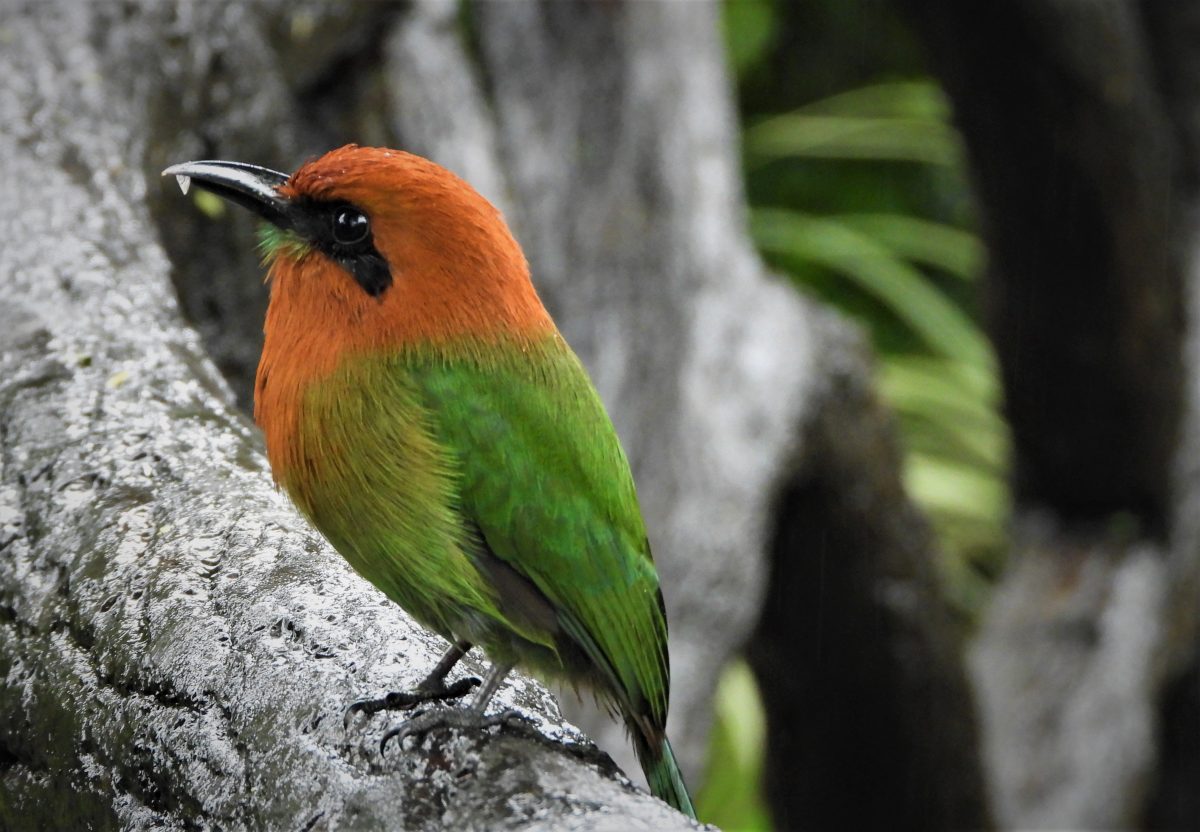
When I was a youn birder somebody told me that the motmot shaped its tail by plucking part of the feathers to leave the racket.. That is not true. The central tail feathers are attached and fall off during preening, creating the racket shape of the tail.
The local name in Costa Rica is “dumb bird”. Is comes from its habit of
this comes from his habit of staying still and not moving for a long time. Now you now, next time you visit Costa Rica open your eyes and try to find this outstanding treasures hidden in the forest!!
Note: This is a series of articles about birds of the Neotropics. The species of birds that will be covered in this collection of articles are toucans, quetzal, motmots, manakins, tanagers, and many other species.
The articles do not have a scientific format, but rather have a general informative character. The text is the product of the investigation of works written on the subject, although bibliographic citations are not provided.
Wildbird is a tour operator agency that organizes birdwatching trips to Costa Rica and Panama. Tours for photography and birding holidays.
Costa Rica is ready for tourism again. If you live in London go to Waterloo Station and look for us!! https://es.travel2latam.com/nota/62626-costa-rica-costa-rica-conducts-promotional-campaign-in-london.html
The country decided to open their borders to international flights and visitors from all over. People who plan a trip for photography or birdwatching in Costa Rica will find us ready to offer a safe and wonderful birding holiday.

The celebration of Palm Sunday is a very popular tradition in the Catholic world of Latin America. In Colombia the feathers of the Yellow-eared Parrot have been used as decorations during this festivity. The local Church intervened trying to get people to change the custom and achieve the recovery of the bird populations.
This proved to be effective over time and people stop killing parakeets.
However, by 1988 this species had disappeared in the Colombian Andes and the scientific community was feared that the species had become completely extinct.
The Loro Parque Fundación (http://www.loroparque-fundacion.org/) indicated that the last 20 specimens were found in Ecuador and after a year of searching a population of 81 individuals was found in the community of Roncesvalles in the Central Andes of Colombia. Subsequently, in January 2001, a second population of 63 individuals appeared in Jardín, in the Department of Antioquia.

Since that time, protection efforts have been continuous and the recovery has been so successful that in 2010 the International Union for Conservation of Nature (IUCN) reduced the threat category of the Yellow-eared Parrot from critically endangered to endangered according to the Journal El Espectador on September 12. That is really good news!
This is a story of success and positivism that you can read in full in the following article:
International team of scientists declare the Yellow-eared Parrot saved from extinction thanks to conservation action https://proaves.org/en/international-team-of-scientists-declare-the-yellow-eared-parrot-saved-from-extinction-thanks-to-conservation-action/
Wildbird Tours organizes birdwatching tours and photography trips to Costa Rica and Panama. Birding groups, customized birding holidays and bird watching vacations anywhere in Costa Rica.
Note: This is a series of articles about birds of the Neotropics. The species of birds that will be covered in this collection of articles are toucans, quetzal, motmots, manakins, tanagers, and many other species.
The articles do not have a scientific format, but rather have a general informative character. The text is the product of the investigation of works written on the subject, although bibliographic citations are not provided.
Wildbird is a tour operator agency that organizes birdwatching trips to Costa Rica and Panama. Tours for photography and birding holidays.

First of all, what is a true tanager? Common names are never wrong because you can give a bird any common name you want. It is supposed that the most advisable thing is to call a bird with the same common name that the other species of that family have in order to avoid confusions, but a bird can be called a tanager even if it is not a traupid and nothing happens.
In my previous post about antbirds (https://watchingbirdscostarica.com/blog/do-antbirds-eat-ants/) we learned there are several families of birds that are not related to each other and are called “antbirds”. Good examples are anttanagers, antwrens, antpittas, antthrushes. But most of these antbirds do not belong to the “true antbirds” or Thamnophilidae family.

To make things more confusing, these birds do not belong to the family their name indicates, since anttanagers are cardinals and antthrushes are not thrushes but formicarids. Antpittas are not true antbirds and they are not pittas either. Only antvireos and antwrens are tamnophilids or true antbirds, but they are neither wrens nor vireos. Clear enough?
Well, good news. The same thing happens with tanagers. There are two large groups of them: the family Thraupidae or true tanagers and the others (some members of the cardinals, Rosy Thrush-Tanager recently moved to the new family Rhodinocichlidae, Dusky-face Tanager recently moved to the new family Mitrospingidae).
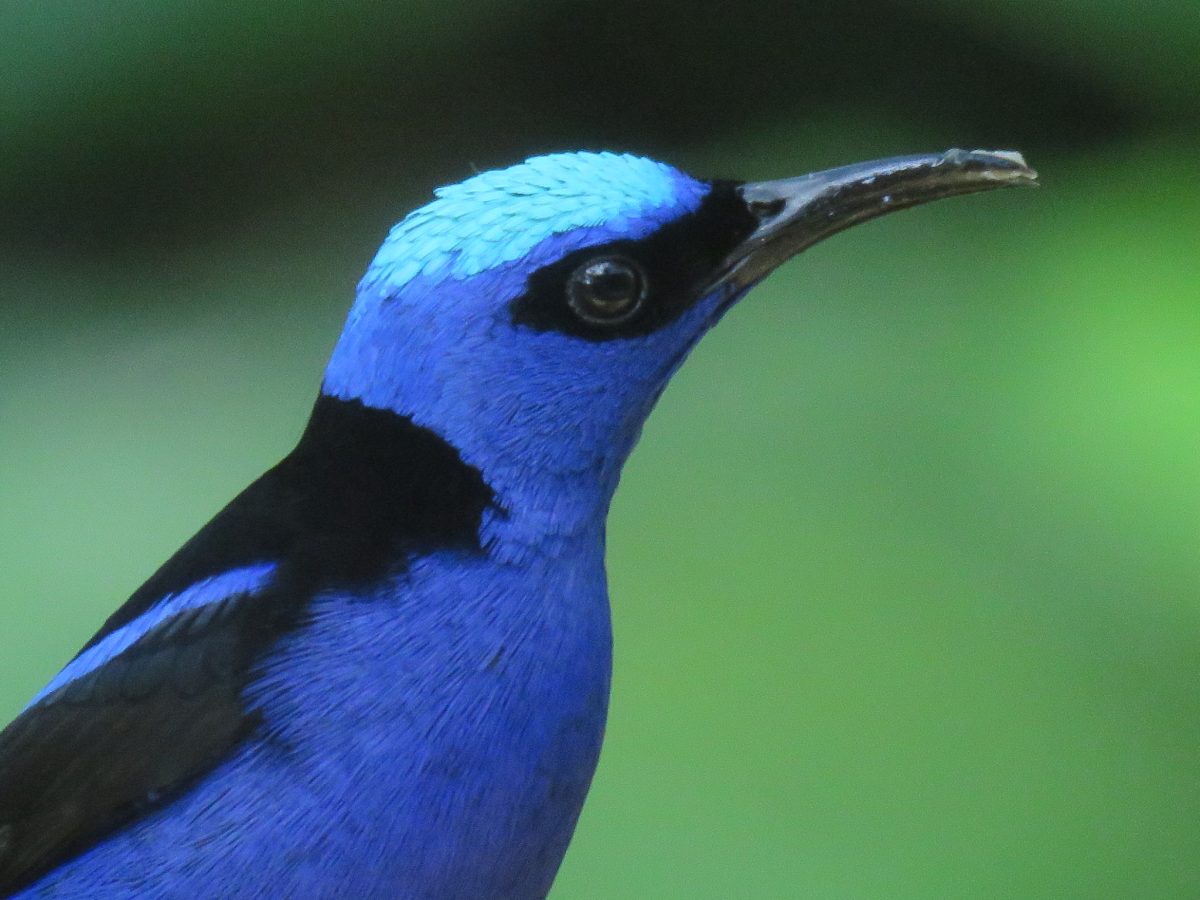
In today’s blog I’m going to talk about true tanagers or traupids.
The Thraupidae family is endemic to the Neotropical region, and is found nowhere else on the world. If you are a keen birder and need that family for your lifelist, you have to come to the Neotropics. That’s it, as simple as that. All members of this family are essentially non-migratory.
The family represents one of the most diverse groups of birds in the world. Is according to many ornithologists the second-largest family of birds in the planet and represents more than 10% of all bird species in the Neotropics.
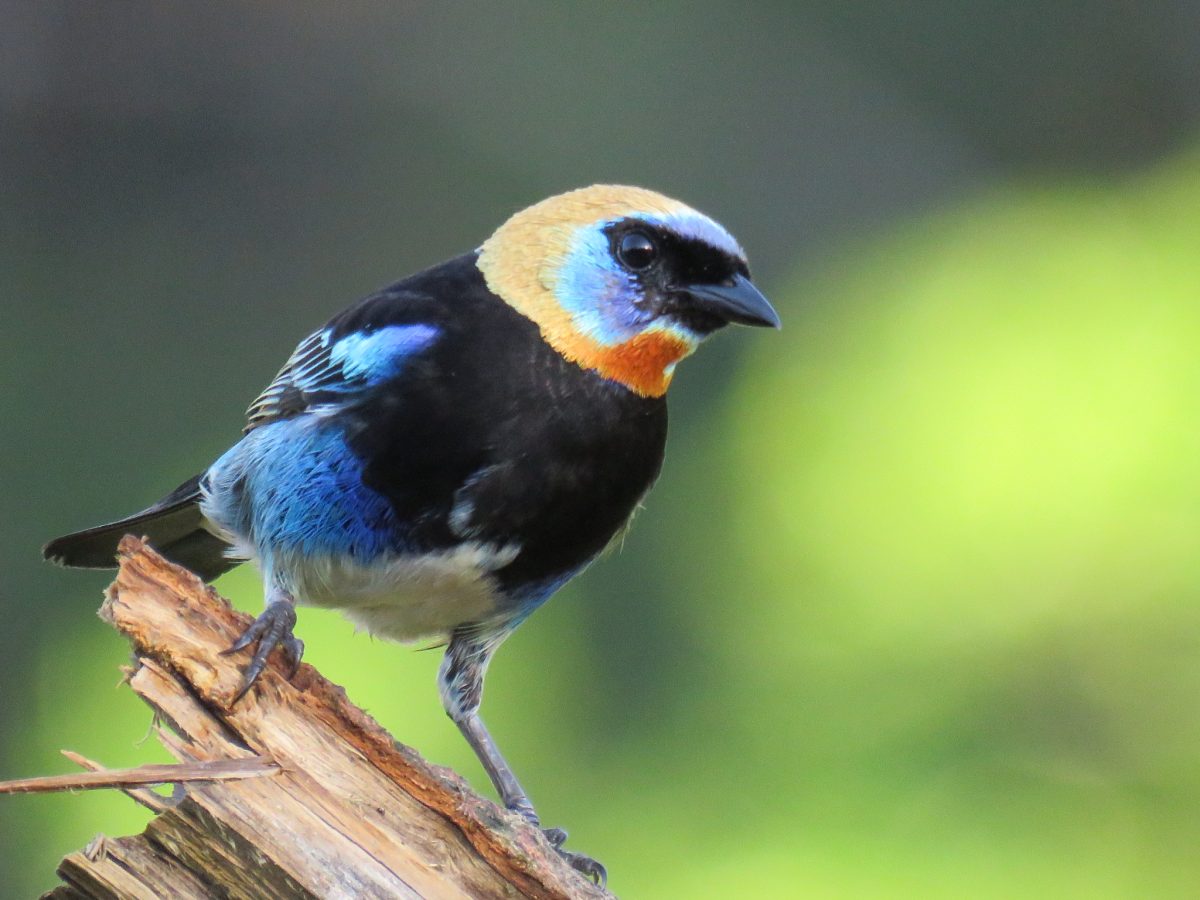
Since genetic sequences are used to help determine the relationships between species, a greater delimitation of this family and other related ones has been achieved. But, for this reason this family has undergone various taxonomic changes, and various groups of species have been added and then removed from it.
Not all the members of this family look the same. Certainly all members of the genus Tangara look similar, but the finches, saltators and seedeaters look different. Take note that even Darwin’s finches on the Galapagos are considered true tanagers.

Spectrographically speaking, the bird with the brightest red plumage
In 2017 a taxonomic earthquake occurred. Ten species of traupids were moved to cardinals, and Rosy Thrush-Tanager and Dusky-face Tanager were each placed in their own family. But only that. The whole family Emberizidae was removed from the Neotropics and almost all its members (Saltators and New World Seedeaters) moved to Traupidae. What a year!!
Traupids are colorful. Many species are recognized mainly for their striking colors, but also for their diverse behavior. People who visit Costa Rica for birdwatching and photography they always look for tanagers because of its beauty and also because they are easy to photograph.
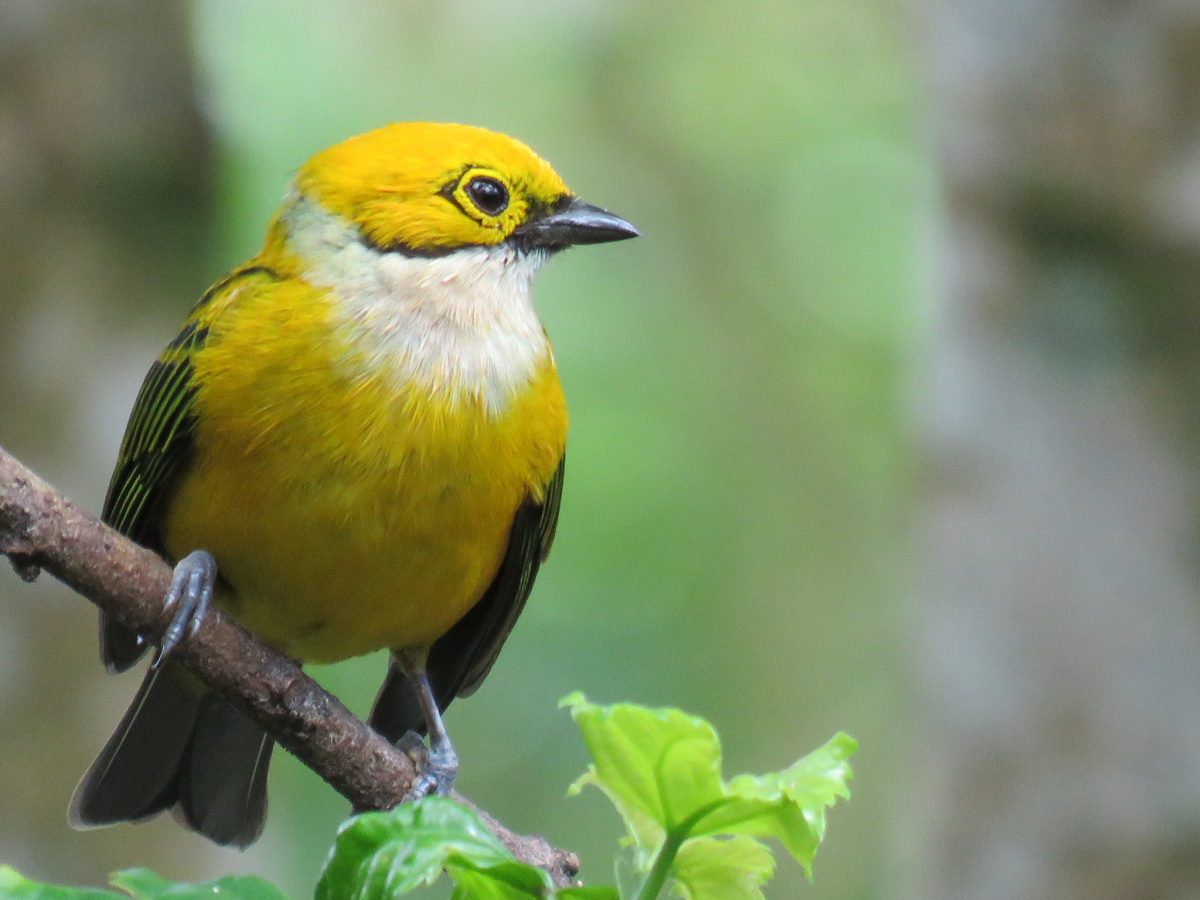
They live in all levels of the forest. Some are found only in the canopy, others in the middle level, and some are followers of ants in the understory. There are species that hunt insects and larvae in the tangle vegetation and are shy, while others frequently venture gardens and are frequent visitors to feeders. Most of them are not gifted singers, live small groups, and is also common to find them as part of mix flocks.
Their diet is very varied as they go for seeds, fruits, insects and nectar. Well, it makes sense. In such a large and diverse group it is important to exploit different ecological niches to reduce competition.
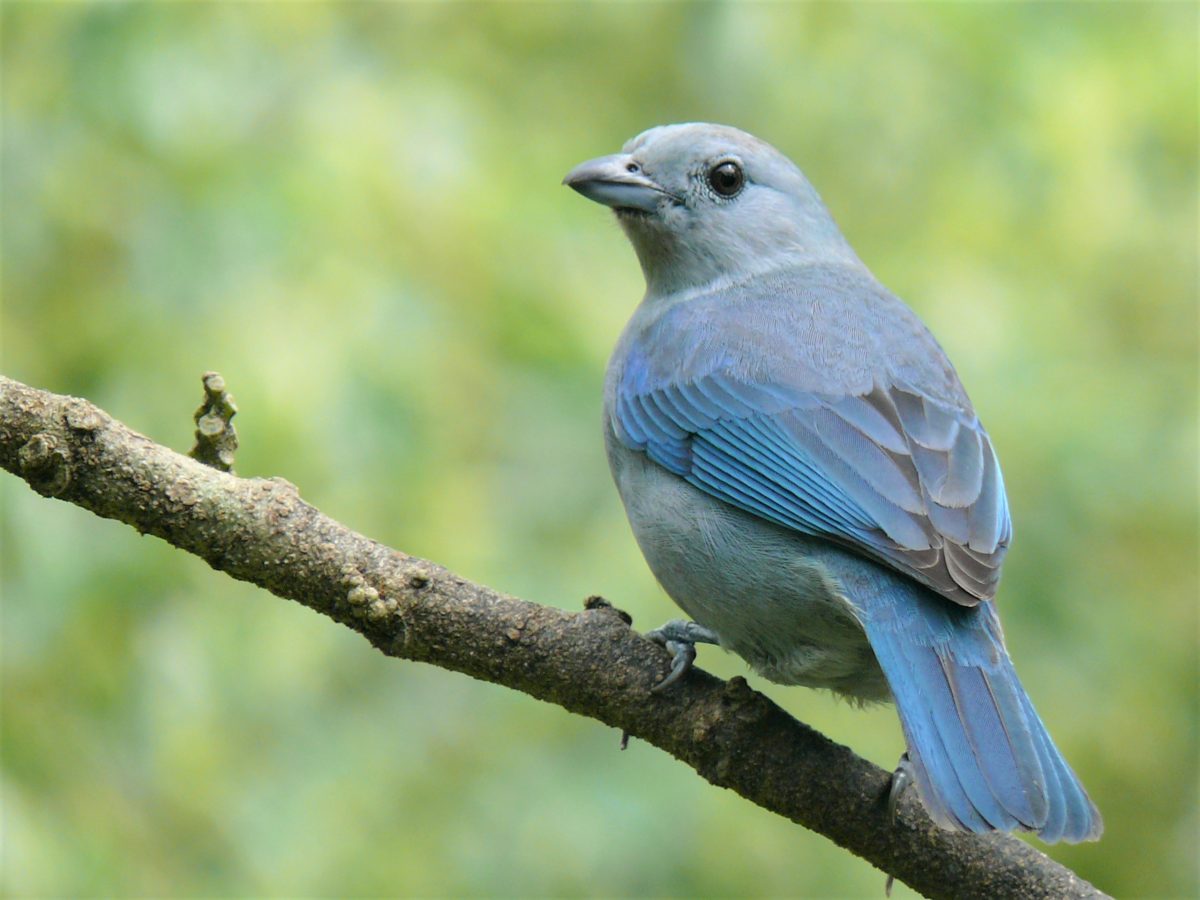
There is no doubt that together with the toucans, macaws, hummingbirds and motmots, the family of the traupids is one of the most emblematic group of birds of the Neotropics.
Note: This is a series of articles about birds of the Neotropics. The species of birds that will be covered in this collection of articles are toucans, quetzal, motmots, manakins, tanagers, and many other species.
The articles do not have a scientific format, but rather have a general informative character. The text is the product of the investigation of works written on the subject, although bibliographic citations are not provided.
Wildbird is a tour operator agency that organizes birdwatching trips to Costa Rica and Panama. Tours for photography and birding holidays.

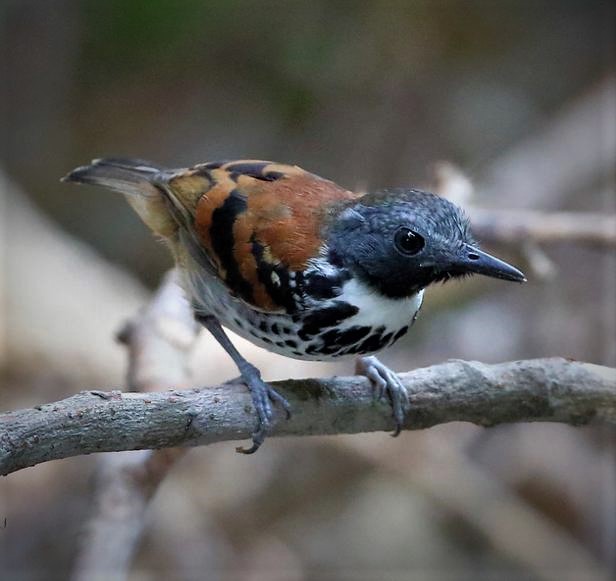
Of course not. Ants are an important source of food, but if they eat the ants their food supply runs out. Antbirds use ants only to find food, but they do not eat ants.
In this blog I am going to talk about a group of birds that have a very interesting behavior and that I have not seen in any forest outside of the tropical Americas. They are the group of Antbirds. Not all antbirds belong to the same family and some common names can be confusing. The antwren is not a wren, the ant-tanager is not a tanager, the ant-vireo is not a vireo, the antthrush is not a thrush, the antshrike is not a shrike, and the antpita is not a pita. So what do they have in common? They feed on insects and most of them belong to the Thamnophilidae.

There are 234 species of antbirds and they are only found in the Neotropics, in rainforests of Central and South America. In Costa Rica we have 22 species of antbirds. In the neotropics there are 31 species threatened with extinction as a result of the destruction of their environment, as tamnophilids are not hunted or used as cagebirds.
Antbirds are not very attractive, they have rounded wings and strong legs. Its color is mainly dark gray or brown. They are shy, and usually live deep in the forest, and birders can usually see them only for a very short time. People who visit Costa Rica for photography and birdwatching and find these birds in the forest know that they have been lucky .
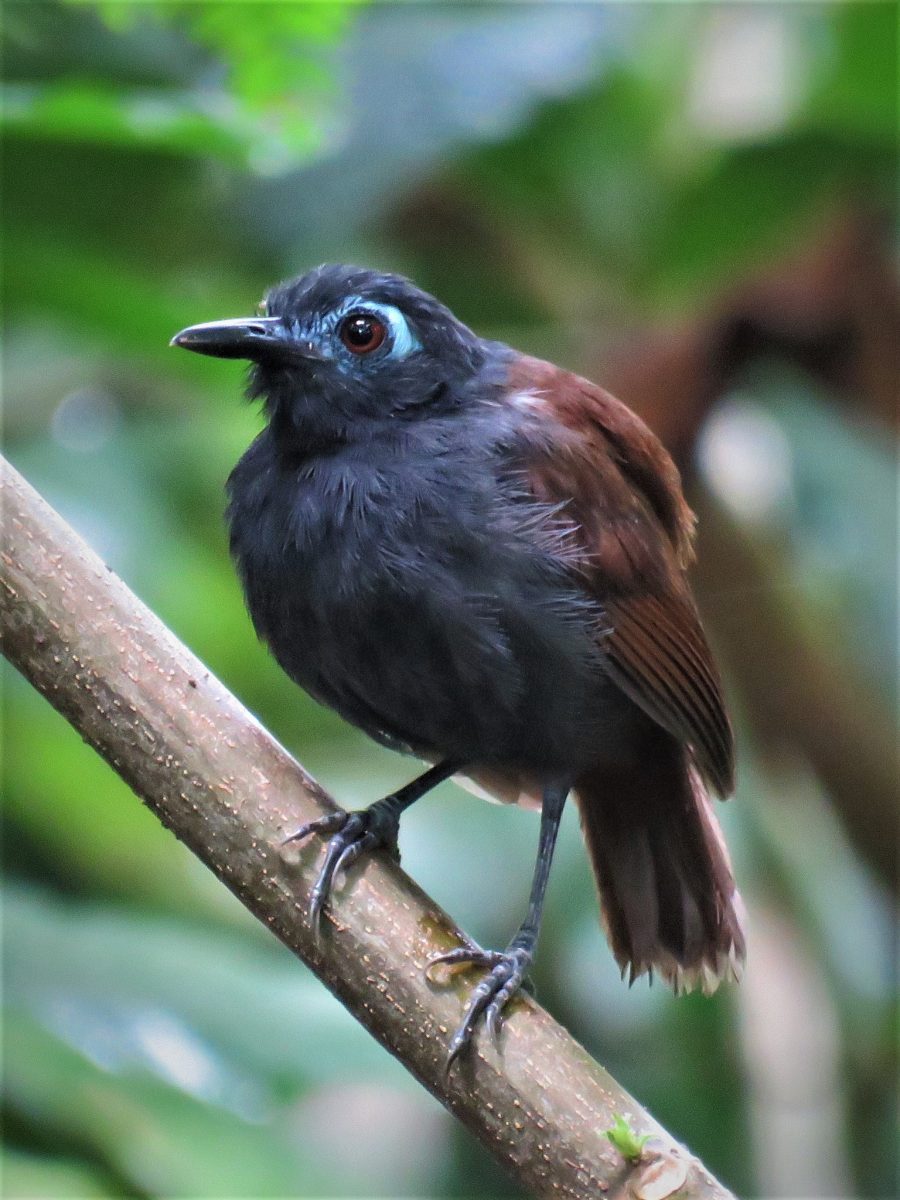
What makes antbirds really attractive is their behavior. They have developed an adaptation that allows them to live in the forest using other species that find food for them.
These birds are specialized in following swarms of army ants Eciton burchelli in the tropical forest. Ants are predators and hunt for insects, spiders, and lizards. When ants move on the forest floor, cockroaches, grasshopers, and many other insects and arthropods try to escape. Birds find them easily and catch them. As you can see, antbirds do not eat ants but instead use ants to get their food.

I am going to talk about one of my favorite species as an example, because it is one of the most attractive birds within the antbird group and it is one of the species that all birdwatchers who visit costa Rica look for. It’s called Ocellated Antbird. (Phaenostictus mcleannani). The observations on this antbird are based on the results of the article by Johel Chaves-Campos published in
Zeledonia 16: 2 Noviembre 2012 (¿Cómo localizan las aves a las hormigas arrieras Eciton burchellii? El caso del seguidor obligatorio de hormigas arrieras Phaenostictus mcleannani – Ocellated Antbird).

Most species of antbirds look for ants when they want to, as they also forage for food by hunting directly, and they hunt within the swarm of ants only when they find them by accident. But Ocellated Antbird only feeds on army ants and that is why they are called specialists. But it is not easy to live their lives following army ants, especially since E. burchellii colonies are nomadic and can move their nest hundreds of meters a night while the birds sleep. It is not uncommon for ocellated to lose their location. these birds are not very good at finding colonies of army ants if they do not know exactly where they are.
That is why the antbirds have to go out every morning to look for the place where the ants moved to be able to eat.
How do the Ocellated find ants in a big and dense forest? Good question.
They use several tricks:
1. The ocellated takes time out of their day to check where active swarms are, so they can be found more easily the next day. They remember the places where the ants were hunting the day before. Ocellated do not move erratically in the forest. They always move in a straight line toward the swarm of ants.
Each individual sings at dawn immediately before leaving its dormitory and calls its couple to follow him. They fly in a straight line towards the first swarm they visited the day before. If that swarm is not active, the ocellated should look for the next one.
Swarms that are closer to the ocellated’s territory are better, since the pair that lives in that territory and their neighboring pair can eat 60% more insects than birds that come from further afield. When the swarms are not around, the pairs have to fly farther and eat less. That’s not a good deal. Some couples travel more than a kilometer to check their first swarm of the day.
2. They listen to the songs of other species that follow army ants, and move through the forest until they reach the activity (that is, the food. Each individual ocellated has its own song, which suggests that they can recognize to each other from a far away.
3 Ocellated ones cannot find swarms of ants by sound or smell. They must use their sight or by chance. That is why it is safer to follow other individuals who know where the swarms are.
So it is common to observe birds traveling in groups in a straight line from one swarm to another. At the end of the day, between 4-5 pm they return to their dormitory.
Note: This is a series of articles about birds of the Neotropics. The species of birds that will be covered in this collection of articles are toucans, quetzal, motmots, manakins, tanagers, and many other species.
The articles do not have a scientific format, but rather have a general informative character. The text is the product of the investigation of works written on the subject, although bibliographic citations are not provided.
Wildbird is a tour operator agency that organizes birdwatching trips to Costa Rica and Panama. Tours for photography and birding holidays.

The three most stable isotopes of hydrogen: Protiu, deuterium and tritium
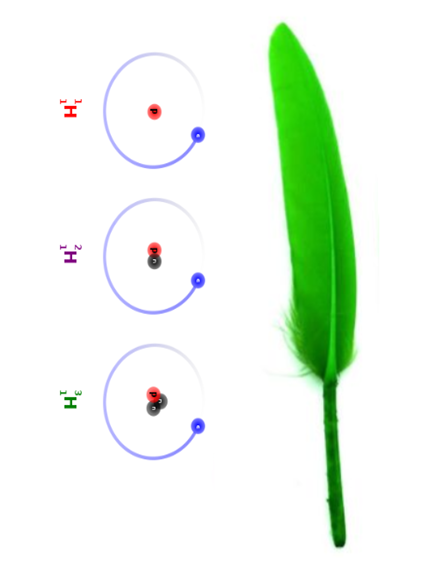
This article is about the use of stable hydrogen isotope analysis on tail feathers. By using this technique the scientists can tell the wintering grounds of Ruby-throated Hummingbirds in Costa Rica.
After the migration Ruby- throated spend several months on the northern Pacific lowlands of Costa Rica, where the last remnants of tropical dry forest in Central America has been protected in national parks and other public reserves. But also this habitat has been cleared for beach resorts, cattle ranches, sugar cane fields, rice, watermelon or cantaloupe.
Once the ornithologist trace the migration route and determine the wintering spots the local ecologists can start conservation programs and better practices to reduce the ecologial impact on the habitat Ruby- throated and other migrants use.
Stable isotope analysis has now had some 20 years of field collection of samples and laboratory analysis. The project I am going to describe is the stable hydrogen analysis of adult Ruby-throated Hummingbird tail feathers.
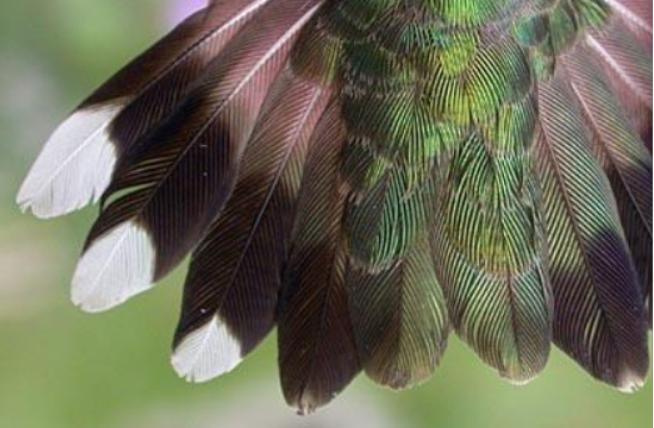
The analysis works when a tail feather is grown a new to replace an old worn tail feather grown a year earlier on the wintering area. The new feather absorbs the elements where it’s grown: hydrogen, oxygen, carbon etc. Across North, Central and South America the amounts of stable isotopes of hydrogen, oxygen and carbon vary as a ratio to “normal hydrogen, oxygen and carbon. When the variation is known by scientists and researchers, by measuring the ratio of “normal” hydrogen H2 to a stable hydrogen isotope H3, the ratio can reveal the location where the feather collected was grown.
In this project, stable hydrogen isotope analysis was selected because the analysis is regularly done, relatively inexpensive and previous studies have used stable hydrogen isotope analysis to find locations.
This project follows closely previous studies which selected the R4, fourth tail feather from the middle of the tail, because it’s the largest tail feather. Better to have more feather for analysis than not enough feather to analysis should a sample need to be re-analyzed for a whole variety of reasons.
Now, it is all great to collect tail feathers from Ruby-throated Hummingbirds for analysis. It is known where the feather was collected but was that feather grown at the collection spot? Adult Ruby-throated Hummingbirds molt (change tail feathers) on their wintering grounds. This study is attempting to learn where adult Ruby-throated Hummingbird caught on their respective breeding area (mate, nest and raise young) migrate to winter?
The known winter area stretches across Central America: Mexico to northern Panama. I traveled to the Nicoya Peninsula to collect tail feathers from wintering Ruby-throated Hummingbirds for a know wintering location. Thus, analysis values for the known wintering area can be compared with analysis values for breeding ground adult Ruby-throated Hummingbirds to determine where the breeding adults wintered in Central America.
All the necessary permits and permissions to collect and take the collected R4 tail feathers back to Canada were obtained from the Costa Rican government prior to leaving the country with the collected samples.
It is important to learn where Ruby-throated Hummingbirds that breed in North America migrate to winter given the changes in climate and changes to native landscape as the local population clear more native habitat to grown crops for sale.
The project has come to where the analysis is to be done to learn where the new tail feathers were grown on their wintering areas in Central America. Analysis has yet to be completed.
Ron Jensen lives in Saskatoon, Canada. He has been banding Ruby- throated for years and now he uses stable hydrogen isotope analysis on tail feathers to determine the route across Central America and wintering spots in Costa Rica. https://www.youtube.com/watch?v=FhMAzJrz-rE
images: isotopes from wikipedia/ bird tail from roads end naturalist
Wildbird Tours organizes birdwatching tours and photography trips to Costa Rica and Panama. Birding groups, customized birding holidays and bird watching vacations anywhere in Costa Rica.
Popular posts from our blog!


